
Development Insight / NAMAT
Why Buildability Matters More Than the Architectural Idea Alone
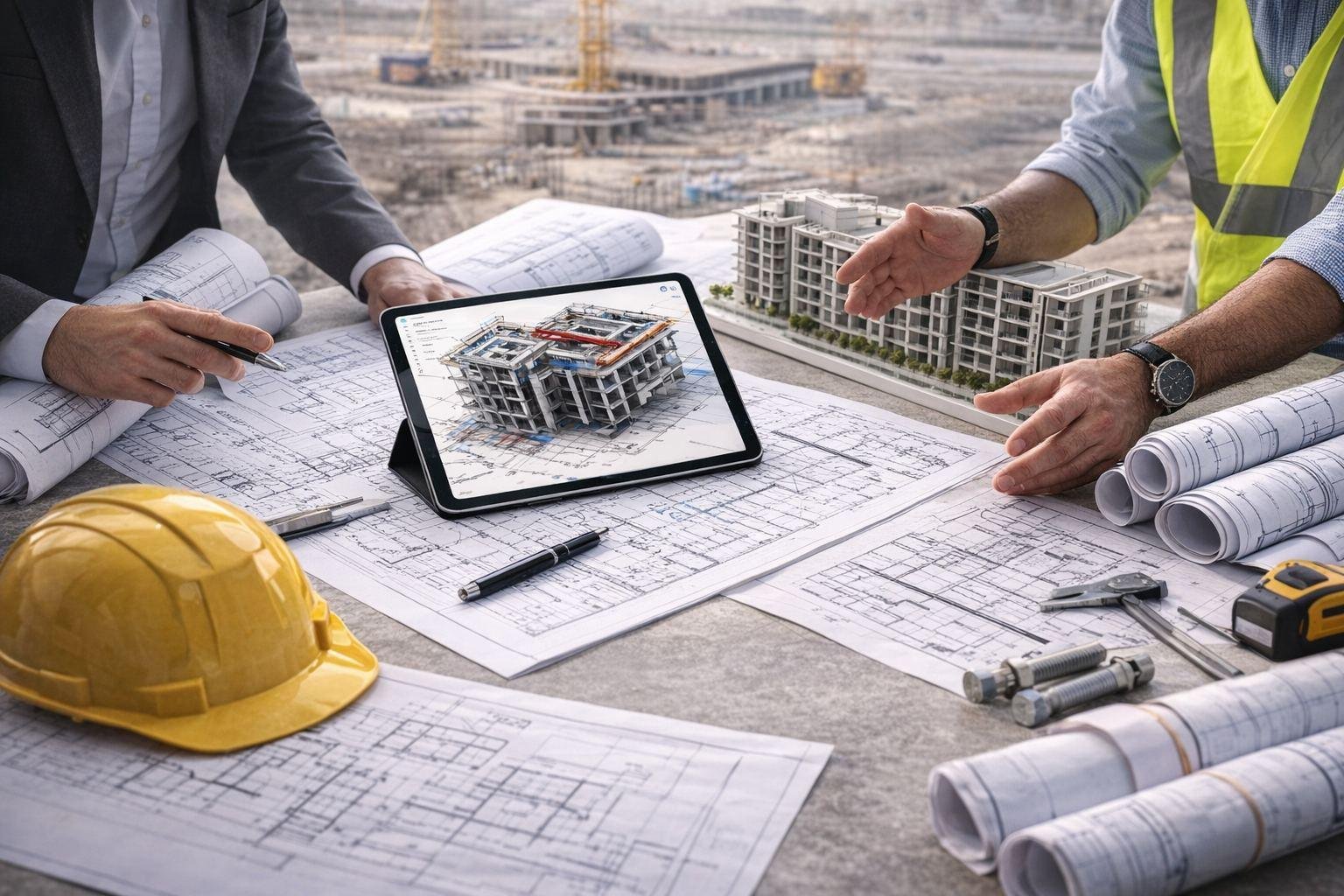
A strong architectural idea may attract attention at launch, but it is not enough to make a project successful. Its value only appears when it can be translated into a coordinated design, clear approvals, defined cost, and a delivery programme that can be executed on site.
In residential development, the idea is only one part of a much larger process that determines whether a project can be built and delivered as intended.
01Buildability means the idea can be delivered
Buildability is not about limiting design ambition. It is about integrating execution, procurement, and operational thinking from the beginning.
An idea must be tested early against practical questions: can it be built efficiently, approved without delay, and delivered within the required cost and timeframe?
02The idea alone does not resolve coordination and approvals
Concepts that appear strong at an early stage often face challenges when they move into coordination between architecture, structure, and building services, or when they are reviewed by authorities.
If the design cannot be clearly coordinated and approved, it will lead to revisions and delays, regardless of its visual quality.
03Ignoring cost and programme turns design into a burden
A successful project is not defined by form alone. It must be priced, procured, and delivered within a clear financial and time framework.
Complex structures, difficult façades, or impractical detailing can place direct pressure on cost and programme, affecting viability and execution.
04Buildability reduces redesign and on-site waste
When design decisions are made without testing execution, issues begin to appear during construction.
Late adjustments, coordination conflicts, and material changes create delays and inefficiencies. Early integration between design and execution reduces rework and supports a more stable construction process.
05Success is measured after delivery, not at launch
The value of a residential project becomes clear after completion, during operation and use.
A project must perform in terms of usability, maintenance, efficiency, and long-term quality. Buildability ensures that what is designed can function effectively beyond the launch phase.